
Cycling in Japan: The Complete Guide to Planning a Cycling Holiday
Japan is an incredible country to explore by bike.
Beyond Tokyo, Kyoto and Osaka, Japan has quiet mountain roads, traditional villages, coastal landscapes, rice fields, forests, hot springs and small towns where everyday life moves at a completely different pace.
For cyclists, this makes Japan much more than a sightseeing destination. It is a country where the journey itself can become one of the highlights of the trip.
But planning a cycling holiday in Japan can feel complicated at first.
Where should you go? When is the best time to cycle? Are Japanese roads safe? Should you bring your own bike? What about luggage? And how difficult is cycling in Japan?
This guide covers everything you need to know before planning a cycling holiday in Japan, from choosing the right region to understanding what to expect on the road.
Is Japan Good for Cycling?
Absolutely.
Japan is particularly interesting for cyclists because of the variety of landscapes you can experience within a relatively small area.
You can start the day cycling beside the sea, climb through a forested mountain valley and finish the afternoon in a traditional Japanese onsen.
You can ride between rice fields, pass through small villages, stop at a local restaurant and stay in a traditional Japanese accommodation.
And because Japan has such a strong railway network, it is also possible to combine cycling with trains when necessary, making it easier to explore different parts of the country.
One of the biggest advantages of cycling in Japan is the opportunity to get away from the busiest tourist destinations.
The further you travel from the major cities, the quieter the roads tend to become.
This is where cycling becomes particularly rewarding.
You are no longer simply visiting Japan.
You are travelling through it.
Best Time to Cycle in Japan
Japan has four very distinct seasons, and choosing when to go can make a big difference to your cycling experience.
Spring
Spring is one of the most popular times to visit Japan.
Temperatures are generally comfortable for cycling, the countryside becomes green and, depending on the region and timing, you may also experience the famous cherry blossoms.
However, spring conditions vary considerably between regions.
Mountainous areas such as Nagano can remain cold later into the season, while southern parts of Japan become warmer earlier.
Summer
Summer can be hot and humid, particularly in lowland and coastal areas.
For this reason, we don’t generally recommend the hottest part of summer for demanding multi-day cycling holidays.
However, higher-altitude areas and northern regions can offer more comfortable conditions.
Summer can also be an interesting time to experience rural Japan, local festivals and traditional events.
Autumn
Autumn is one of our favourite seasons for cycling in Japan.
Temperatures are generally comfortable, humidity decreases and the mountains can become spectacular as the leaves change colour.
Regions such as Shikoku and Nagano are particularly beautiful at this time of year.
For many cyclists, autumn offers one of the best combinations of weather, scenery and quieter roads.
Winter
Winter is more complicated for cycling.
Many mountain roads can be cold or snowy, particularly in northern and mountainous parts of Japan.
However, this doesn’t mean that cycling is impossible everywhere.
The southern islands and areas with milder climates can offer very different conditions.
If your main goal is a multi-day cycling holiday, however, spring and autumn are usually the safest choices.
The Best Regions for Cycling in Japan
Japan offers an enormous variety of cycling destinations.
Rather than trying to see the entire country on one trip, we recommend choosing a region based on the type of cycling experience you are looking for.
Shikoku and the Shimanami Kaido
For cyclists looking for a combination of iconic routes, mountains, rural Japan and traditional culture, Shikoku is one of the most rewarding choices.
The famous Shimanami Kaido crosses the Seto Inland Sea between Honshu and Shikoku, connecting several islands with a spectacular series of bridges.
But the real adventure begins when you continue into Shikoku.
Here you can discover mountain roads, the Iya Valley, Dogo Onsen, traditional villages and quiet roads far from the main tourist routes.
This is a great choice for experienced cyclists who want a challenging and varied cycling holiday.
Explore our Shikoku & Shimanami Kaido cycling tour →
Nagano and the Japanese Alps
If mountains are what you are looking for, Nagano is an excellent place to start.
The region is surrounded by the Japanese Alps and offers mountain roads, forests, rice fields, traditional villages and spectacular views.
It is also a fantastic place to combine cycling with Japanese culture.
After a day on the bike, you can relax in an onsen, explore a traditional town or enjoy a local Japanese meal.
For cyclists who enjoy climbing and quieter mountain roads, Nagano offers some of the most rewarding riding in Japan.
The San’in Coast
The San’in region on the western side of Japan’s main island is much less visited than Tokyo, Kyoto or Osaka.
That is precisely what makes it interesting for cycling.
The area combines dramatic coastline, fishing villages, mountains, rural roads and historic towns.
Cycling here gives you the opportunity to experience a quieter and more traditional side of Japan.
It is an excellent choice for travellers who want to get away from the country’s main tourist routes.
Noto Peninsula
The Noto Peninsula offers another very different cycling experience.
The peninsula extends into the Sea of Japan and is known for its rugged coastline, traditional communities, rice fields and rural landscapes.
It is the kind of place where the landscape changes slowly and the journey becomes the main attraction.
For cyclists looking for quiet roads and authentic rural Japan, Noto can be a fascinating destination.
Road Cycling or E-Bike?
Japan can be a fantastic destination for both road cyclists and e-bike riders.
The right choice depends mainly on your fitness, experience and the type of route you want to ride.
Road cycling
Road bikes are ideal if you enjoy longer distances, climbing and maintaining a faster pace.
Japan has plenty of challenging terrain, particularly in mountainous regions such as Nagano and Shikoku.
If you are an experienced cyclist, you can find some excellent climbs and long mountain routes.
E-bikes
An e-bike can be a great option if you want to enjoy the scenery without worrying as much about the climbs.
This is particularly useful in mountainous areas.
You still get to cycle the same roads, enjoy the landscape and experience the country at your own pace, but the electric assistance makes long climbs considerably more manageable.
For many travellers, an e-bike is also a good compromise when one person in a group is a stronger cyclist than the others.
What Are Japanese Roads Like?
One of the first questions many international cyclists have is what it is actually like to cycle on Japanese roads.
The answer varies depending on where you are.
Major cities can obviously be busy, with traffic, pedestrians and complicated intersections.
But once you leave the cities, the experience can be completely different.
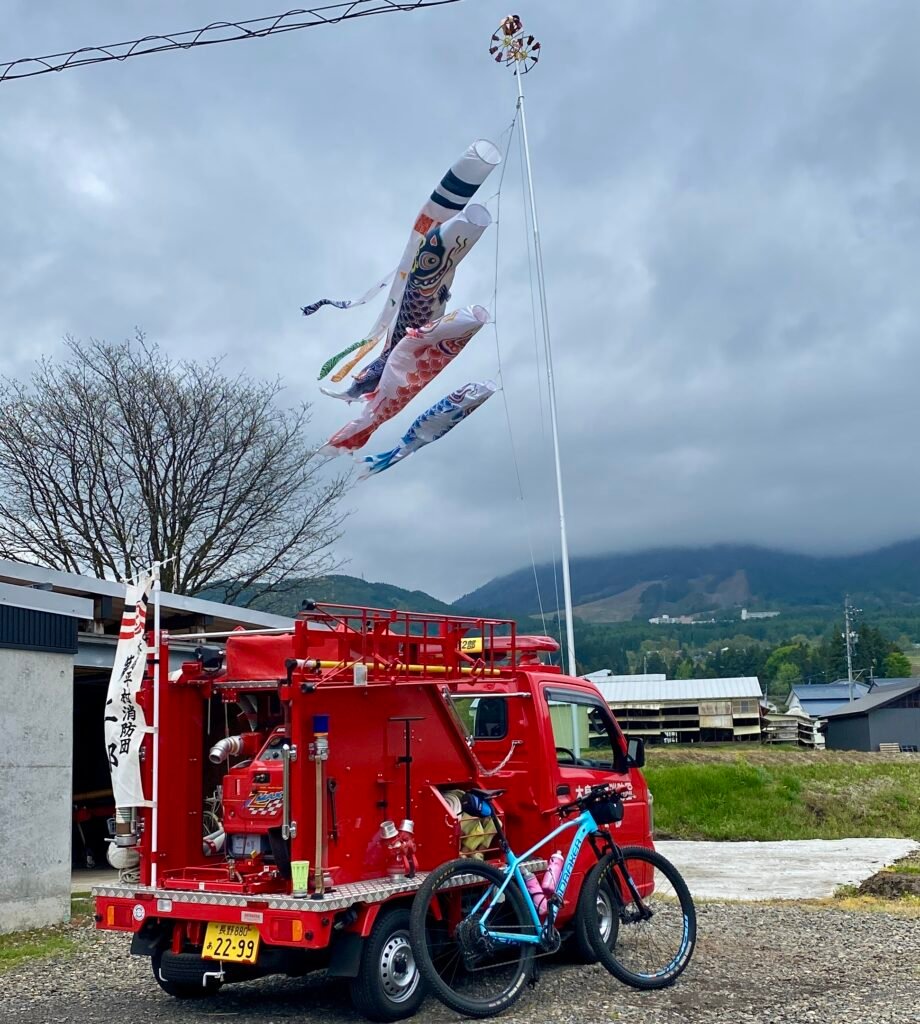
Rural Japan has many quiet roads that pass through forests, rice fields, villages and mountains.
Drivers generally share the road with cyclists, although you should always follow local traffic rules and remain aware of your surroundings.
Japan also drives on the left-hand side of the road, something that cyclists from countries where traffic drives on the right need to remember.
Mountain roads can be narrow and steep, and some routes can involve significant climbing.
This is one of the reasons why choosing the right itinerary is so important.
Cycling in Rural Japan
For us, this is one of the best reasons to cycle in Japan.
The countryside offers a completely different experience from the country’s famous cities.
You might pass a small Buddhist temple, see farmers working in the rice fields or stop at a tiny shop in a village.
You may not see another international tourist for hours.
And that is part of the charm.
Japan’s rural areas are often where you encounter some of the country’s most interesting cultural details.
Old wooden houses, local festivals, small shrines, family-run restaurants and traditional agricultural landscapes are all part of the experience.
Cycling gives you time to notice these things.
If you were travelling by train or car, you would simply pass them by.
Accommodation and Luggage Transfers
Accommodation is an important part of planning a cycling holiday in Japan.
Depending on the region and itinerary, you can find everything from modern hotels to traditional Japanese accommodation such as ryokan.
Staying in a ryokan can be a memorable part of the experience.
You may sleep on a futon, enjoy a traditional Japanese dinner and relax in an onsen after a day of cycling.
For multi-day cycling trips, luggage logistics are also important.
Carrying everything you need for a week on the bike can make a challenging route considerably harder.
For this reason, luggage transfers can be a major advantage.
With supported cycling tours, your main luggage can be transported between accommodations while you ride with only what you need during the day.
This allows you to enjoy the cycling without turning every climb into a battle with your suitcase.
Food and Onsen: Part of the Cycling Experience
A cycling holiday in Japan is also a food experience.
Every region has its own specialities, and food is an important part of discovering the country.
You can expect everything from ramen and soba noodles to sushi, seafood, rice dishes, local vegetables and regional specialities.
And after a long day of cycling, there is perhaps nothing better than an onsen.
Japan’s hot springs are deeply connected to the country’s culture, and many cycling destinations have excellent onsen towns.
Imagine finishing a long mountain ride, checking into your accommodation and soaking in a hot spring while your legs recover.
For us, this is one of the things that makes cycling in Japan so special.
The cycling and the experiences around it are inseparable.
How Difficult Is Cycling in Japan?
There is no single answer.
Japan can be easy or extremely challenging depending on where you ride.
A relatively flat coastal route can be accessible to many recreational cyclists.
A mountain route through Shikoku or the Japanese Alps can involve long climbs and significant elevation gain.
Before choosing a cycling holiday, consider:
- How many kilometres you normally cycle
- How comfortable you are climbing
- How many consecutive days you want to ride
- Whether you prefer road bikes or e-bikes
- How much time you want to spend sightseeing
- Whether you are comfortable cycling in changing weather
The good news is that there are cycling experiences in Japan for many different levels.
The important thing is to choose the right route rather than assuming that all cycling in Japan is equally difficult.
Guided or Self-Guided Cycling in Japan?
Both options have advantages.
Self-guided cycling
A self-guided trip gives you more independence.
You can decide when to stop, how long to stay somewhere and how fast you want to travel.
It can be a great option for experienced travellers who are comfortable navigating and organising their own logistics.
However, planning a multi-day cycling trip in Japan requires some preparation.
Accommodation, luggage, route planning, bike logistics and transport between regions all need to be organised.
Guided cycling
A guided cycling tour takes care of much of the organisation.
You can concentrate on riding while someone with local knowledge manages the route, accommodation, luggage and logistics.
A local guide can also introduce you to places and experiences that you might otherwise miss.
At Vamos Bike Tours, we believe that the best guided cycling holidays should still give you a sense of independence.
The goal isn’t simply to follow someone from A to B.
It is to give you the freedom to enjoy the journey while knowing that the important details are taken care of.
How Long Do You Need for a Cycling Holiday in Japan?
This depends on your itinerary.
A short cycling trip can focus on one region, such as the Shimanami Kaido.
For a deeper experience, we recommend allowing at least a week.
With more time, you can combine cycling with sightseeing and avoid rushing between destinations.
One of the biggest mistakes you can make when planning a cycling holiday in Japan is trying to see too much.
Japan may have an excellent transport network, but cycling works differently.
You need time to appreciate the small roads, villages, food and landscapes along the way.
Sometimes the best day is not the one where you cover the most kilometres.
What Makes Cycling in Japan Different?
There are many countries where you can have an excellent cycling holiday.
Japan is different because of the combination of nature, culture, food and hospitality.
You can climb a mountain road in the morning, visit a centuries-old temple, eat a bowl of noodles in a tiny local restaurant and finish the day in an onsen.
The country also rewards slow travel.
The further you move away from the major cities, the more important the journey becomes.
And that is exactly what cycling allows you to do.
By Hugo VBT| Oct. 2026