
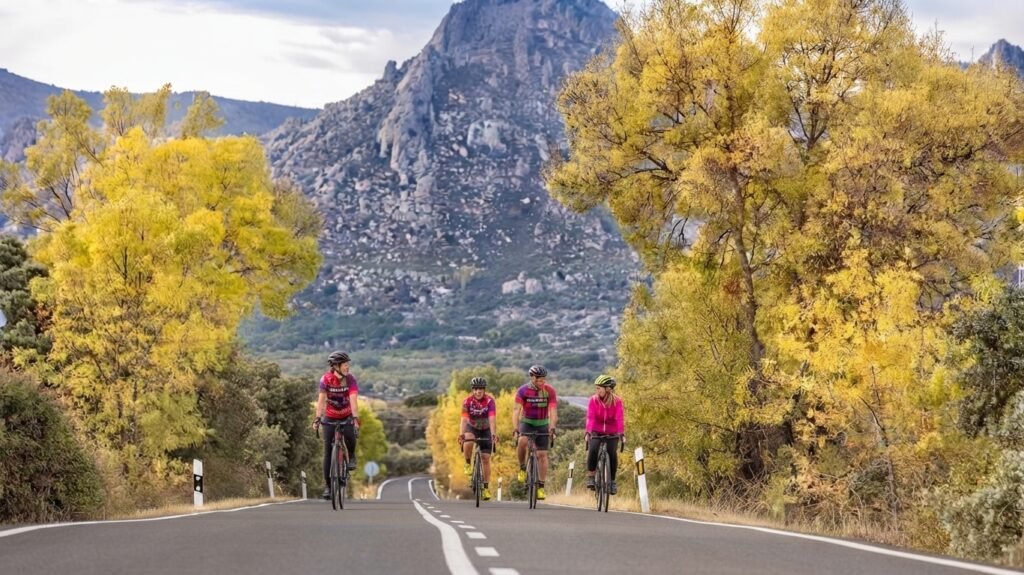
Best Cycling Regions in Spain:
North, South, East and the Canary Islands
Spain is one of the most diverse countries in Europe for cycling. From green mountains and vineyards in the north to white villages in the south, Mediterranean landscapes in the east and volcanic scenery in the Canary Islands, every region offers a completely different cycling experience.
Choosing where to cycle in Spain depends on what you are looking for: challenging climbs, quiet country roads, vineyards, Mediterranean landscapes, gastronomy, or an authentic experience away from the main tourist routes.
At Vamos Bike Tours, we believe that cycling in Spain is about much more than simply following a route. It is about discovering small villages, stopping for a coffee, tasting local food, meeting local people and taking the time to enjoy the landscape.
Here are four great regions to explore Spain by bike.
1. Northern Spain – Green Landscapes, Vineyards and Mountains
Northern Spain is a fantastic choice for cyclists who enjoy green landscapes, mountains, vineyards and small villages.
The north is generally greener and cooler than much of southern Spain, with a mixture of mountain roads, forests, valleys and rural landscapes. It is also a wonderful region for combining cycling with gastronomy and local culture.
La Rioja is one of our favourite cycling destinations in northern Spain.
The landscape is shaped by vineyards, rolling hills and historic villages. Quiet country roads connect wine-growing areas, wineries and medieval villages, creating excellent opportunities for relaxed road cycling and e-bike tours.
The area around Laguardia, San Vicente de la Sonsierra, San Millán de la Cogolla and Ezcaray offers a wonderful variety of landscapes and experiences.
You can cycle through vineyards around Rioja Alavesa and Rioja Alta, visit historic villages and monasteries, or head towards the mountains around Ezcaray for a more challenging ride.
San Millán de la Cogolla, home to the famous Yuso and Suso monasteries, is particularly interesting for cyclists who want to combine cycling with history and culture.
Ezcaray, surrounded by mountains and forests, offers a completely different landscape and is a great starting point for routes through the Sierra de la Demanda.
Autumn is especially beautiful in La Rioja, when the vineyards turn shades of red, orange and gold and the grape harvest brings the countryside to life.
But the grape harvest season, or vendimia, is something truly special. It is a fantastic time to cycle through the region and see the wine-making process in action.
“Visiting La Rioja during the grape harvest”
Perfect for: road cycling, e-bikes, wine lovers, gastronomy, mountains and cultural cycling holidays.
Asturias, Cantabria and the Basque Country
Further north, Asturias and Cantabria offer a completely different landscape.
Expect green valleys, forests, mountains, traditional villages and spectacular coastal scenery.
The Basque Country combines green mountains with small villages and excellent food, while the Spanish Pyrenees offer spectacular mountain cycling for those looking for more challenging routes.
The terrain can be demanding in some areas, but there are also routes suitable for recreational cyclists and e-bike riders.
2. Southern Spain – White Villages, Olive Groves and Mediterranean Landscapes
Southern Spain is famous for its dramatic landscapes, whitewashed villages, olive groves, mountains and Mediterranean atmosphere.
Andalusia is particularly attractive for cyclists who want to combine beautiful scenery with Spanish culture and gastronomy.
You can ride through olive-growing landscapes, climb mountain roads and pass through traditional white villages before stopping for a meal in a local restaurant.
Places such as Ronda, Grazalema and the Alpujarras offer spectacular scenery and interesting stops along the way.
The best season for cycling in southern Spain
Timing is particularly important here.
Summer is not our favourite season for long-distance cycling in southern Spain.
Temperatures in southern Europe are becoming increasingly high, and during the hottest part of the day it can simply be too hot to enjoy a long bike ride.
Summer is also the main tourist season, which means more traffic and more activity on popular roads and destinations.
For cycling, spring and autumn are much more comfortable.
However, summer has another side that makes it a wonderful time to visit Spain.
It is fiesta season.
During the summer months, many Spanish villages become much livelier. People who normally live in the cities often return to their family villages for their holidays.
Small towns fill with life, and there are often local festivals, traditional music, folklore, dancing, food and cultural activities.
Sometimes the best experience is simply sitting outside a local bar and having a conversation with someone from the village.
So while we would generally choose spring or autumn for a long cycling holiday in southern Spain, summer can be a fantastic time to experience Spanish village life.
3. Eastern Spain – Mediterranean Coast, Mountains and Rural Roads
Eastern Spain offers a wonderful combination of Mediterranean coastline, mountains, vineyards, farmland and historic towns.
The regions of Catalonia, Valencia and Murcia provide a huge variety of cycling landscapes, from coastal roads overlooking the Mediterranean to quiet inland roads surrounded by orchards, vineyards and mountains.
Catalonia and the Costa Brava
Catalonia is one of Spain’s most varied cycling destinations.
The Costa Brava combines Mediterranean coastline, small fishing villages and beautiful inland roads.
Away from the busiest tourist areas, you can discover quiet country roads, medieval villages and vineyards.
Further inland, the landscape becomes more mountainous, offering routes for cyclists looking for more challenging terrain.
The combination of cycling, Mediterranean food, wine and historic villages makes Catalonia particularly attractive for a multi-day cycling holiday.
Valencia and the Mediterranean countryside
The Valencia region offers a different type of cycling experience.
The area around Valencia combines Mediterranean landscapes with orange groves, rice fields, mountains and traditional villages.
Cyclists can enjoy relatively flat routes along the coast or head inland for more challenging terrain.
The region is also famous for its food, making it easy to combine a day on the bike with local dishes and traditional cuisine.
When to cycle in Eastern Spain
As in southern Spain, the hottest months can be challenging for cycling, particularly inland.
Spring and autumn are generally excellent seasons for exploring the region by bike, while coastal areas can offer pleasant cycling conditions outside the hottest part of summer.
4. The Canary Islands – Cycling, Volcanoes and Island Hopping
The Canary Islands offer a completely different cycling experience from mainland Spain.
Located off the coast of Africa, the islands have a mild climate throughout much of the year, making them an attractive destination for cycling during the European winter.
Each island has its own character, landscapes and cycling possibilities.
You can ride through volcanic landscapes, along coastal roads, through mountain areas and into small rural villages, often with spectacular views of the Atlantic Ocean.
Discover the Canary Islands by bike
If you want to experience more than one island, our Hop-In Island experience combines cycling with island hopping.
Rather than staying in one place, you can discover different islands and experience how dramatically their landscapes and atmosphere can change.
From volcanic scenery and challenging mountain roads to coastal routes and quiet villages, every island offers something different.
It is a great option for cyclists who want to combine cycling, adventure and island exploration in one trip.
The Canary Islands are also particularly interesting for cyclists looking for a winter escape, when many other European cycling destinations have colder or less predictable weather.
Perfect for: winter cycling, road cycling, adventure holidays, island hopping and cyclists looking for varied landscapes.
Cycling in Spain Is About More Than the Route
One of the best things about cycling through Spain is the opportunity to discover places that you might otherwise never visit.
A small village square.
A local bar.
A family-run restaurant.
A winery surrounded by vineyards.
A conversation with someone who has lived in the area all their life.
These small moments can become some of the most memorable parts of a cycling holiday.
Learn a few words of Spanish
If you are travelling through smaller Spanish villages, it is worth remembering that English is not always widely spoken, especially outside the main tourist destinations.
You don’t need to speak fluent Spanish. Learning a few simple expressions can make your experience much more enjoyable.
Try:
Hola – Hello
Buenos días – Good morning
Buenas tardes – Good afternoon
Por favor – Please
Gracias – Thank you
Un café, por favor – A coffee, please
Una cerveza, por favor – A beer, please
¿Cuánto cuesta? – How much does it cost?
¿Dónde está…? – Where is…?
¿Está abierto? – Is it open?
Don’t worry about making mistakes. People usually appreciate the effort.
Sometimes a simple “Hola” can be the beginning of a much longer conversation.
Discover Spain by Bike
Spain isn’t just one cycling destination.
The north offers green mountains, vineyards and cooler landscapes.
The south offers white villages, olive groves and Mediterranean scenery.
The east offers Mediterranean coastlines, mountains, vineyards and rural roads.
And the Canary Islands offer volcanic landscapes, island hopping and cycling almost all year round.
At Vamos Bike Tours, we believe that cycling is one of the best ways to discover Spain: slowly, locally and at your own pace.
Whether you’re looking for a cycling holiday through the vineyards of La Rioja, a challenging mountain adventure, a Mediterranean cycling experience or an island-hopping adventure in the Canary Islands, there is a part of Spain waiting to be discovered by bike.
Explore our cycling tours in Spain and discover a different side of Spain, one kilometre at a time.
By Hugo VBT| Sept 2026